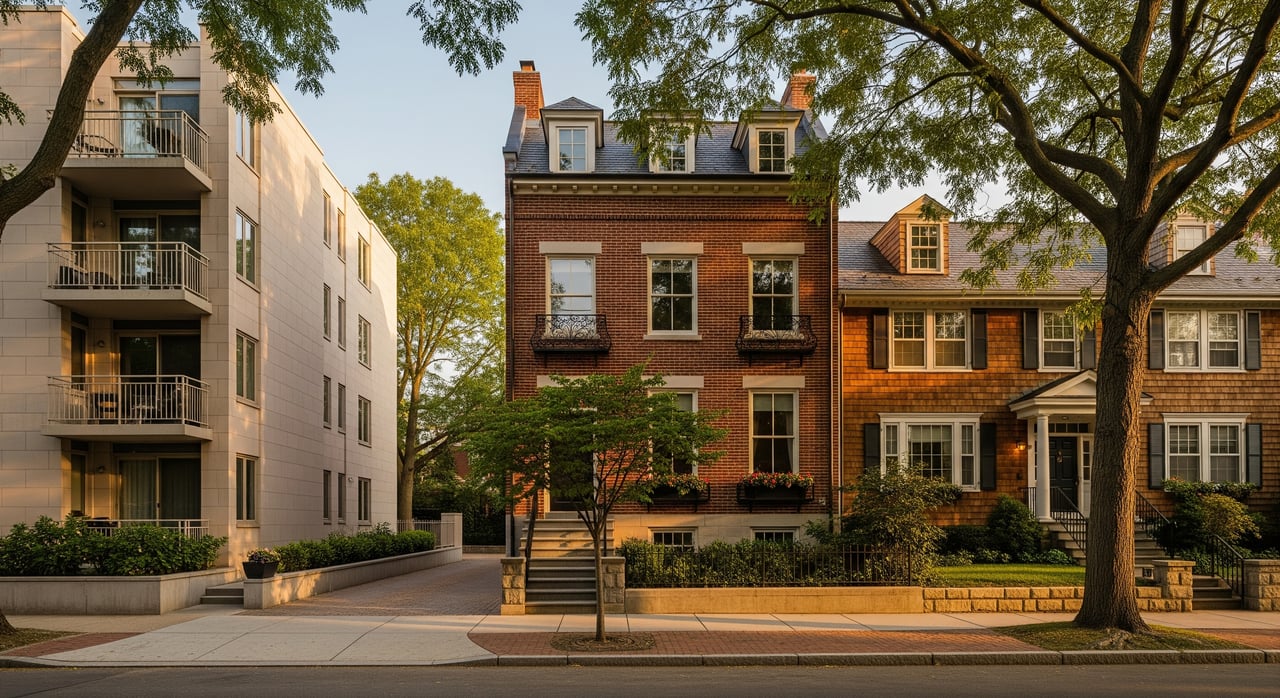
Condo vs Townhome in Silver Spring: Choosing Your Home Type
December 18, 2025
December 18, 2025
Not sure if a condo, townhome, or single-family home fits your life in Silver Spring? You are not alone. Each option comes with its own balance of maintenance, monthly costs, privacy, outdoor space, and commute tradeoffs. In this guide, you will learn how these home types play out specifically in Silver Spring so you can narrow your best fit before you tour. Let’s dive in.
Who this is for: early‑stage Silver Spring buyers who want to align lifestyle, maintenance, and commute with the right home type before hitting the market.
| Factor | Condo | Townhome | Single‑family |
|---|---|---|---|
| Maintenance | Association handles exterior and common areas; owners focus on interiors. Downtown buildings often include plowing, landscaping, and on‑site management. | Mixed. Many HOAs cover common areas and sometimes limited exterior items. Scope varies widely by community. | You handle all exterior systems, landscaping, snow removal, and repairs. Expect a larger time commitment. |
| Monthly costs & HOA | Higher fees are common due to building insurance, elevators, amenities, and reserves. Some central buildings may add capital project assessments. | Typically lower than condos but variable. Budget for HOA plus individual exterior upkeep not covered by the association. | Often no HOA or a voluntary civic association. Monthly costs skew toward utilities, insurance, and maintenance you self‑manage. |
| Privacy & noise | Shared walls/floors and building systems can mean more noise. Higher floors reduce street noise but add elevator reliance. | Fewer shared walls than condos and private entries help with separation. Multi‑level layouts increase privacy. | Most separation and yard space with fewer shared noise sources. |
| Outdoor space & storage | Usually limited to a balcony; some buildings have storage lockers. | Often includes a small yard or patio plus attic/basement storage. | Largest yards, garages, basements, and flexible storage options. |
| Parking | Can be assigned or garage; some buildings charge for spaces or have limited guest parking. | Many include a driveway or garage plus guest parking policies set by the HOA. | Driveway and street parking are common; more flexibility for multiple vehicles. |
| Commute & transit | Best walkability to Silver Spring Metro and Ride On/WMATA bus lines. Strong appeal if you prioritize a quick rail ride. | Often near transit corridors like Georgia Ave and Colesville Rd, with bus or bike access to Metro. | Farther from the core may require more driving via I‑495 or US‑29, though some areas still have bus connections. |
| Financing & resale | Lenders may require the building to meet FHA/VA criteria; confirm project approval and reserves. Downtown rental demand can support resale interest. | Finances like a house in many cases. Popular with buyers seeking more space plus manageable maintenance. | Traditional financing. Strong demand from buyers who value lot size and privacy. |
You will find the most condos in Downtown Silver Spring along the Fenton St and Colesville Rd corridors. Mid‑ and high‑rise buildings offer walkability to retail, dining, and the Red Line. Expect staffed buildings with amenities and comprehensive exterior maintenance.
Townhome communities are common in Sligo Park Hills, Four Corners, and parts of East Silver Spring. These locations usually balance proximity to transit corridors with modest yards and garages or driveways. HOA scopes vary, so compare what exterior items are covered from one community to the next.
Single‑family homes are prevalent in Woodside Park, Kemp Mill, Oakview, and areas north of the downtown core. These neighborhoods offer larger lots and more privacy. The tradeoff can be longer walks or drives to Metro and retail compared with downtown.
Condo fees are often higher than townhome HOAs because they fund building insurance, elevators, amenities, and staffing. Whether you are reviewing a condo or townhome, request the documents listed below before you fall in love with a home.
Downtown Silver Spring condos offer the most convenient access to the Red Line and frequent bus service. Townhomes in inner neighborhoods often sit near routes like Georgia Ave or Colesville Rd, making it simple to catch Ride On or WMATA buses into the core. Single‑family areas farther east and north may rely more on I‑495 or US‑29, though some pockets still have reasonable bus connections.
Proximity to a transit station can support long‑term resale demand, but it may come with higher traffic and noise. If you are sensitive to noise, tour at different times of day and compare upper floors versus street‑level exposure for condos.
When you are ready to run the numbers for Silver Spring, pull current, property‑type‑specific data from trusted sources and cross‑check it with local records.
Finally, compare each option apples‑to‑apples: monthly principal and interest, taxes, insurance, HOA/condo dues, parking costs, utilities included, and a realistic line for maintenance. For condos and townhomes, add any known special assessments over the next 3 to 5 years.
You do not have to figure this out alone. We help buyers match lifestyle, commute, and budget to the right Silver Spring home type, then map price bands and neighborhoods to create a focused, low‑stress search. Start with a conversation and a clear plan.
Start with a complimentary home strategy call with The Guzzone Group of Compass.
Stay up to date on the latest real estate trends.


We embrace people of all walks of life, always approaching new clients and different circumstances with empathy and compassion.