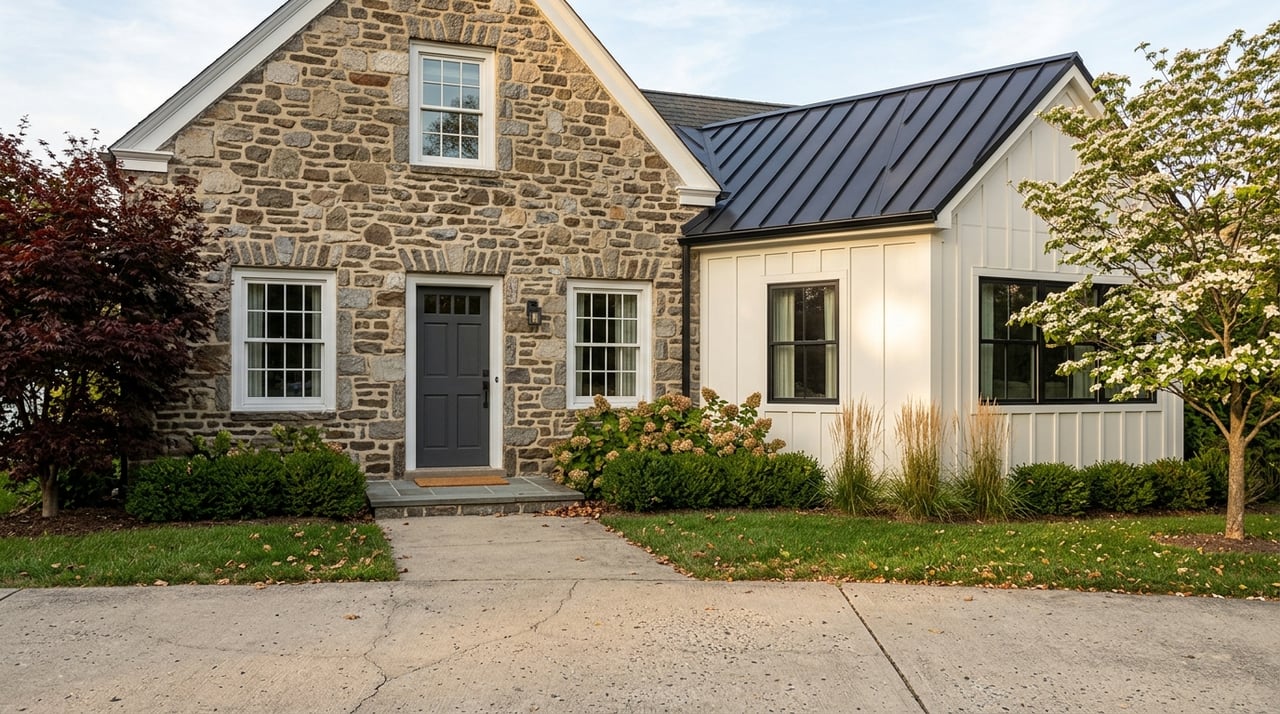
Ellicott City Historic vs New Homes: What Fits Best?
June 18, 2026
June 18, 2026
You can love Ellicott City and still feel torn about what kind of home fits you best. Some buyers picture the historic core with character, walkable Main Street access, and one-of-a-kind architecture. Others want a newer home with a modern layout, garage space, and a more predictable maintenance routine. If you are weighing historic charm against newer builds in Ellicott City, this guide will help you compare the lifestyle, upkeep, and decision points that matter most. Let’s dive in.
Historic Ellicott City gives you a living experience that feels closely tied to the town’s long history. The area is known for its preserved architecture, Main Street setting, and pedestrian-oriented environment with shops and restaurants nearby. If you want a home that feels distinctive and connected to the historic core, this part of Ellicott City has a strong appeal.
That said, historic charm usually comes with more nuance than many buyers expect. In the historic district, exterior work is shaped by local preservation guidelines that aim to protect the streetscape and overall character. This means your home choice is not just about style. It is also about how future changes may be reviewed.
Howard County’s Historic District Commission must approve most exterior changes in the district. That includes new construction, demolition, exterior alterations, signage, landscaping, sidewalks, driveways, and street furniture. If you are considering a historic property, this review process is one of the first things to understand.
The good news is that historic designation does not mean every project is restricted in the same way. Interior alterations do not require review, and routine maintenance generally does not either. The county also notes that owners are not required to maintain or restore their properties, which is an important distinction for buyers who assume historic ownership always comes with a blanket restoration obligation.
In Historic Ellicott City, many day-to-day repairs are treated as like-for-like maintenance. The county guidelines list examples such as repairing or replacing roofs, gutters, siding, windows, doors, trim, and lighting with the same materials and design. Minor landscaping and paving repairs using matching materials may also fall into that category.
For you as a buyer, that means the upkeep conversation should be specific rather than broad. A historic home is not automatically harder to own, but you do need to know which work is considered routine and which changes may trigger review. Asking those questions early can save time and frustration later.
Some rehabilitation work in the historic district may qualify for Howard County property tax credits. With advance approval, certain projects may also be eligible for Maryland state income tax credits. If you are considering a home that may need approved rehabilitation work, this is worth discussing during your due diligence.
These potential credits do not change the fact that every property is different. Still, they can be an important part of the financial picture for buyers who are open to taking on a home with older features or planned improvements.
Newer homes in Ellicott City often appeal to buyers who want modern systems, larger layouts, and fewer unknowns. Instead of prioritizing preservation-era character, these communities tend to emphasize convenience, standardized floor plans, and low-maintenance living. For many buyers, that predictability is a major benefit.
Current local examples show what this looks like in practice. Taylor Highlands is marketed as brand-new townhomes with 3 to 4 bedrooms, 2.5 to 4 bathrooms, and about 2,078 to 3,235 square feet, starting at $699,990. The community highlights low-maintenance homeownership, a clubhouse and pool, and access to Routes 40, 29, and I-70.
Fairways at Turf Valley offers another version of newer-build living. It features oversized townhomes with two-car garages, about 2,623 to 3,200 square feet, open floor plans, gourmet kitchens, and a low-maintenance environment. In practical terms, this is the newer Ellicott City value proposition: more modern design, newer systems, and a more uniform day-to-day ownership experience.
Many newer or suburban-style communities come with homeowners association oversight. That can create more predictability around community rules, shared spaces, and maintenance responsibilities. It can also mean monthly or annual costs and additional policies that you will want to review carefully.
For example, Wheatfield HOA publishes community documents, parking policies, annual assessments, and a snow-removal arrangement that splits certain responsibilities between the HOA and Howard County. While every community is different, this gives you a good sense of how newer neighborhoods may be organized. If you are comparing options, the HOA structure is part of the lifestyle, not just a line item on a budget.
One of the biggest differences between historic homes and newer builds in Ellicott City is how walkability shows up in daily life. Both can offer a walkable feel, but the experience is not the same. Your preference here may shape your decision as much as the home itself.
If you want to be close to shops, restaurants, and civic spaces, the historic core is the more destination-walkable option. You are drawn to a compact town-center experience where the setting itself is part of the appeal. That kind of daily rhythm can be hard to replicate in a newer suburban-style community.
At the same time, Howard County describes the district’s streets and sidewalks as narrow, winding, and often steep. The county also notes that larger parking lots are a more recent development, and planning efforts include wayfinding to help visitors find parking, attractions, and high ground in emergencies. In other words, walkability downtown is appealing, but it comes with real-world tradeoffs around topography, circulation, and parking.
Newer Ellicott City communities tend to offer a different kind of walking experience. Instead of centering daily life around Main Street, they often focus on internal neighborhood paths, gathering spaces, and shared amenities. Taylor Highlands highlights neighborhood gathering areas and community strolls, while Fairways at Turf Valley emphasizes a village setting and nearby resort-style amenities.
For you, the comparison is fairly simple. Historic Ellicott City offers town-center walking. Newer communities often offer amenity-based or neighborhood-based walking. Neither is better across the board. It depends on how you want your day-to-day routine to feel.
When you walk through homes in Ellicott City, the right questions can quickly clarify which path fits you best. The features you notice on a showing are important, but the ownership experience matters just as much. A smart comparison goes beyond finishes and square footage.
If you are touring a home in the historic district, ask about:
These questions help you understand both flexibility and responsibility. They also give you a clearer picture of how the property fits within the historic district’s rules and long-term character.
If you are touring a newer home or townhome community, ask about:
These questions help you test the marketing language against the real ownership experience. A newer home may reduce certain maintenance concerns, but community rules and fees are still part of the tradeoff.
If you are deciding between historic charm and newer construction in Ellicott City, the answer usually comes down to what you value most in daily life. Historic homes often offer character, a strong sense of place, and closeness to Main Street. Newer builds often offer modern layouts, garages, newer systems, and a more predictable maintenance routine.
You do not need to start with a perfect answer. Often, clarity comes from touring both types of homes and comparing how each one feels in real time. When you know what matters most to you, whether that is atmosphere, convenience, flexibility, or upkeep, the right fit becomes much easier to spot.
If you are weighing your options in Ellicott City, The Guzzone Group of Compass can help you compare neighborhoods, home styles, and day-to-day tradeoffs with clear, local guidance.
Stay up to date on the latest real estate trends.


We embrace people of all walks of life, always approaching new clients and different circumstances with empathy and compassion.